One of the most common questions patients ask before starting Hormone Replacement Therapy Treatments (HRT) is: “How long will it take before I feel better?”
The answer depends on several factors, including the type of hormone being replaced, the severity of the hormonal imbalance, the treatment method used, and individual health characteristics. While some people notice improvements within a few weeks, others may require several months to experience the full benefits of treatment.
In this guide, we’ll explain how hormone replacement therapy treatments work, the typical timeline for results, and the factors that influence your progress.
Understanding Hormone Replacement Therapy Treatments
Hormone Replacement Therapy Treatments are designed to restore hormone levels when the body is no longer producing adequate amounts naturally. These treatments may involve:
- Estrogen therapy
- Progesterone therapy
- Testosterone replacement therapy
- Thyroid hormone replacement
- Bioidentical hormone therapy
The goal is to bring hormone levels back into a healthy range, helping improve symptoms and support overall wellness.
Why Results Vary From Person to Person
No two patients respond to hormone replacement therapy treatments in exactly the same way.
Several factors influence how quickly you may notice results:
Type of Hormone Being Replaced
Different hormones affect the body differently. For example, testosterone replacement therapy may improve energy and libido at a different rate than estrogen therapy for menopause symptoms.
Severity of Hormonal Imbalance
Patients with significant hormone deficiencies may notice dramatic improvements once treatment begins, while others with milder imbalances may experience more gradual changes.
Age and Overall Health
Your age, metabolism, medical history, and lifestyle habits can all affect how quickly your body responds to treatment.
Treatment Method
Hormones may be delivered through:
- Injections
- Skin patches
- Creams and gels
- Oral medications
- Hormone pellets
Different delivery methods can influence how quickly hormone levels stabilize.
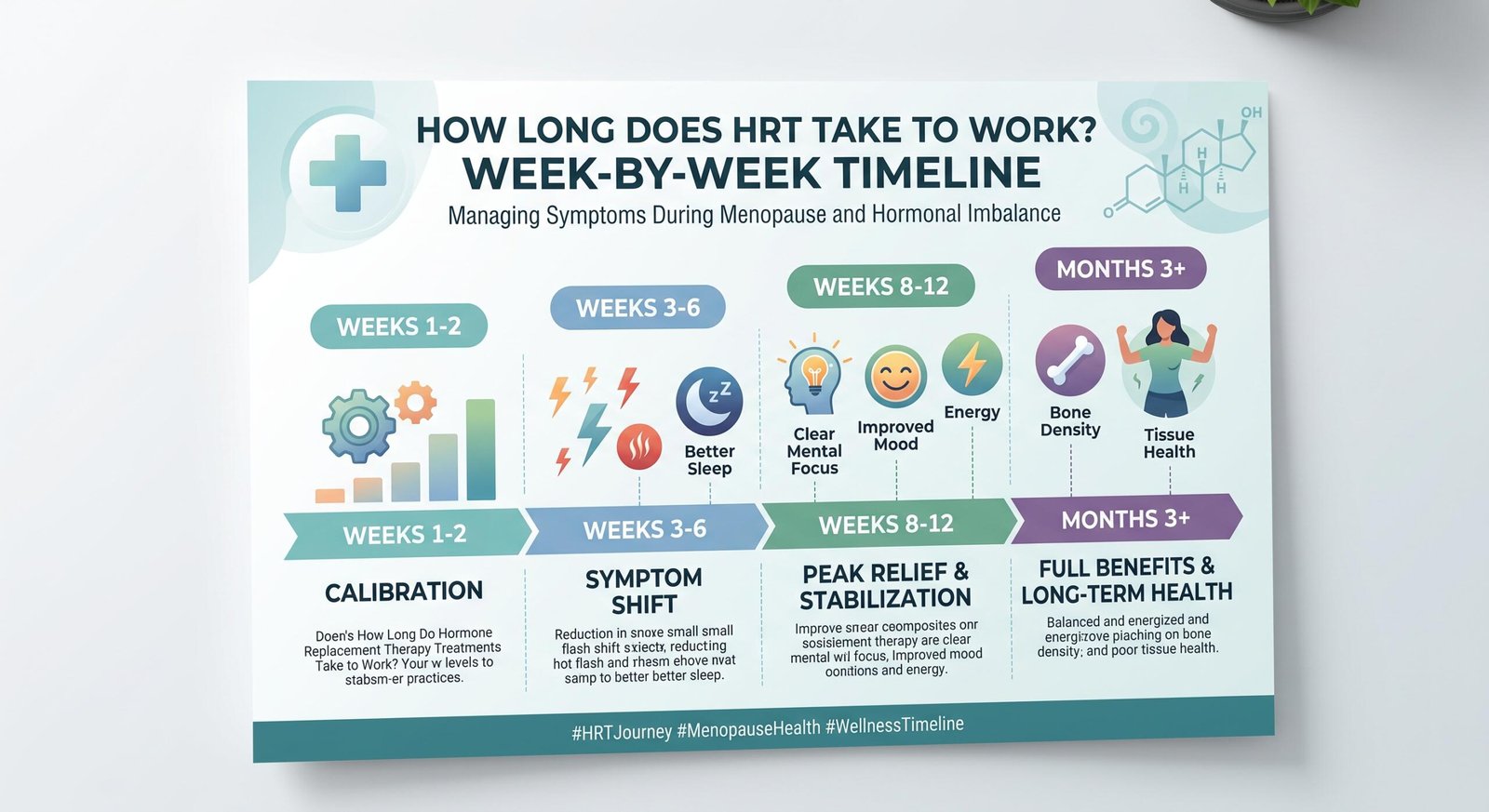
Typical Timeline for Hormone Replacement Therapy Results
Although every patient is different, the following timeline provides a general idea of what to expect.
Week 1–2: Early Adjustments
During the first few weeks, your body begins adapting to changing hormone levels.
Some patients report:
- Increased energy
- Improved motivation
- Better mood
- Reduced fatigue
Others may notice little change initially, which is completely normal.
Weeks 3–6: Noticeable Improvements
As hormone levels begin stabilizing, many patients start experiencing more noticeable benefits.
Common improvements include:
- Better sleep quality
- Improved mental clarity
- Enhanced focus
- Reduced brain fog
- Improved emotional well-being
Women experiencing menopause symptoms may begin noticing reductions in hot flashes and night sweats during this stage.
Months 2–3: Significant Symptom Relief
For many individuals, this is when hormone replacement therapy treatments begin producing meaningful changes.
Patients often experience:
- More consistent energy levels
- Better stress management
- Improved libido
- Enhanced sexual wellness
- Greater emotional stability
- Better exercise performance
Hormone levels are often becoming more balanced by this stage.
Months 3–6: Full Benefits Begin to Develop
Many of the long-term benefits of hormone replacement therapy treatments become more apparent during this period.
Possible improvements include:
- Increased muscle mass
- Improved body composition
- Better bone health support
- Greater endurance
- Improved confidence
- Enhanced quality of life
Patients often report feeling more like themselves again as symptoms continue to improve.
Six Months and Beyond
For some patients, hormonal optimization continues beyond six months.
Healthcare providers may:
- Adjust dosages
- Review symptoms
- Monitor blood work
- Fine-tune treatment plans
These adjustments help maximize results while maintaining safety and effectiveness.
Signs That Your Hormone Therapy Is Working
Positive signs may include:
Physical Improvements
- More energy
- Better sleep
- Reduced hot flashes
- Increased stamina
- Improved strength
Mental and Emotional Improvements
- Better concentration
- Improved memory
- Reduced anxiety
- Enhanced mood
- Greater motivation
Sexual Health Improvements
- Increased libido
- Improved sexual satisfaction
- Better overall intimacy
Many patients notice improvements in several areas simultaneously as hormonal balance is restored.
Factors That May Slow Progress
Although hormone replacement therapy treatments are highly effective for many people, certain factors may delay results.
Poor Sleep
Sleep plays a critical role in hormone regulation and recovery.
Chronic Stress
Elevated stress levels can interfere with hormonal balance and overall wellness.
Unhealthy Diet
Nutritional deficiencies may affect the body’s ability to respond optimally to treatment.
Lack of Physical Activity
Regular exercise helps support metabolism, circulation, and hormonal health.
Inconsistent Treatment
Missing doses or failing to follow treatment recommendations can reduce effectiveness.
How to Maximize Your Results
To get the most from hormone replacement therapy treatments:
Follow Your Treatment Plan
Take medications exactly as prescribed.
Attend Follow-Up Appointments
Routine monitoring allows healthcare providers to make adjustments when necessary.
Prioritize Healthy Nutrition
A balanced diet supports hormone production and overall health.
Exercise Regularly
Strength training and cardiovascular exercise can enhance treatment outcomes.
Manage Stress
Techniques such as meditation, yoga, and deep breathing may help support hormonal balance.
Get Quality Sleep
Aim for seven to nine hours of sleep each night.
Frequently Asked Questions
Can hormone replacement therapy work immediately?
Most patients do not experience immediate results. While some improvements may occur within the first few weeks, full benefits typically require several months.
How long before I notice increased energy?
Many individuals report improved energy levels within two to six weeks after beginning treatment.
How long does it take for hormone levels to stabilize?
Hormone stabilization often occurs within two to three months, although this varies by individual and treatment type.
Will everyone experience the same timeline?
No. Age, health status, treatment method, and hormone levels all influence how quickly results occur.
Final Thoughts
Hormone Replacement Therapy Treatments can significantly improve quality of life for individuals experiencing hormonal imbalances. While some patients notice benefits within a few weeks, most experience substantial improvements within two to six months.
The key to success is patience, consistency, and ongoing communication with your healthcare provider. By following a personalized treatment plan and maintaining healthy lifestyle habits, you can maximize the benefits of hormone replacement therapy treatments and achieve long-term hormonal balance and wellness.
See Our Services at Our Services