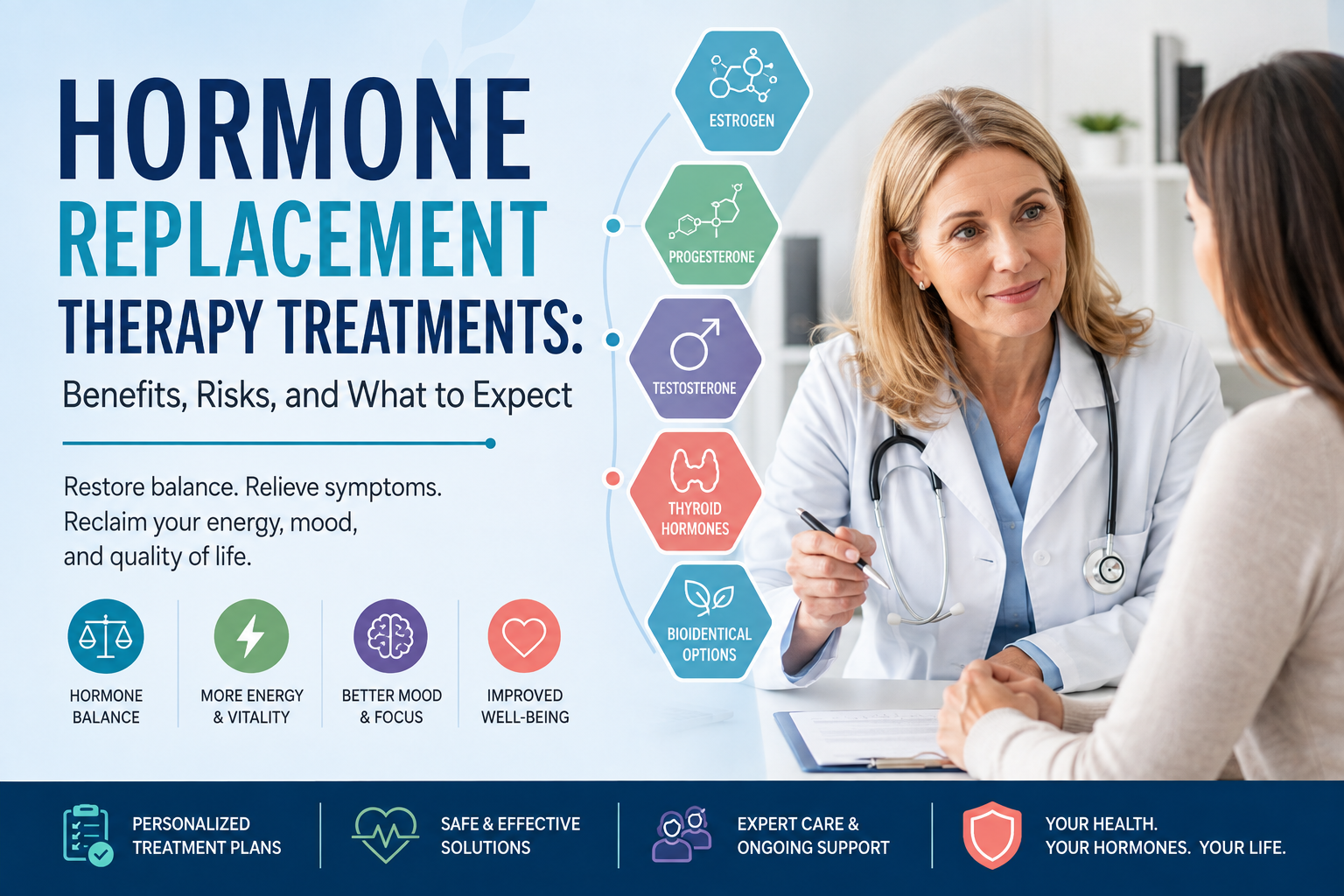
Hormones play a crucial role in regulating many of the body’s essential functions, including metabolism, mood, sleep, energy levels, sexual health, and overall well-being. As people age, hormone levels naturally fluctuate and may decline, leading to symptoms that can affect quality of life. Hormone Replacement Therapy Treatments (HRT) are designed to help restore hormonal balance and relieve symptoms associated with hormone deficiencies.
In this comprehensive guide, we’ll explore the benefits, risks, and expectations of hormone replacement therapy treatments to help you make informed decisions about your health.
What Are Hormone Replacement Therapy Treatments?
Hormone Replacement Therapy Treatments involve the use of prescribed hormones to replace those that the body is no longer producing at optimal levels. These treatments are commonly used for women experiencing menopause and men dealing with low testosterone levels, but they may also benefit individuals with other hormone-related conditions.
The goal of hormone replacement therapy is to restore hormone levels to a healthy range, helping patients achieve better physical, emotional, and mental well-being.
Common Hormones Used in HRT
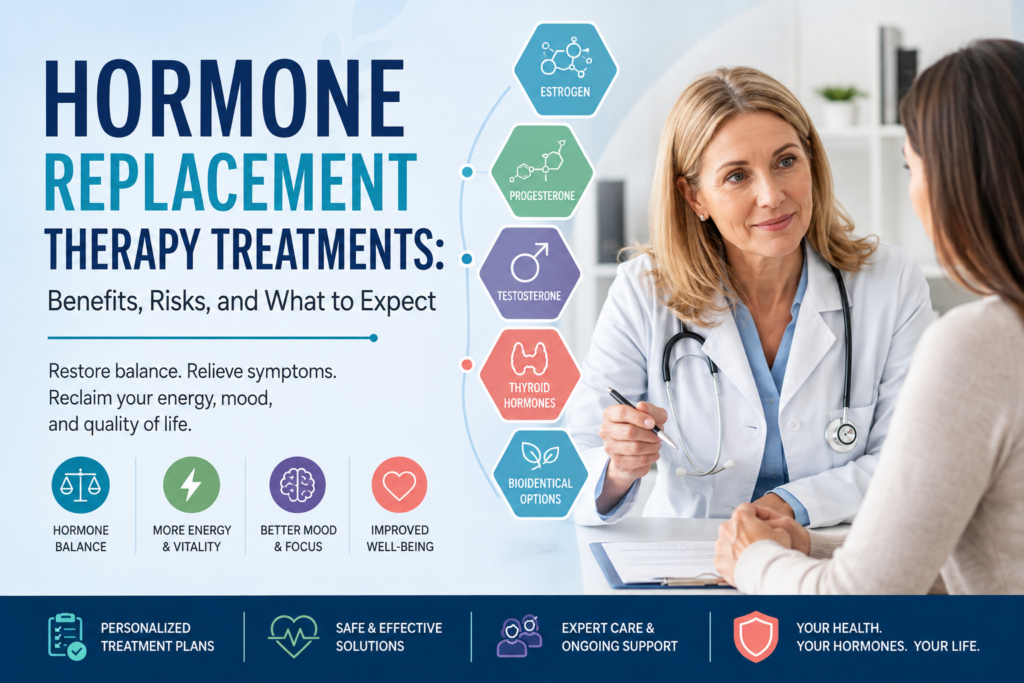
Depending on individual needs, hormone replacement therapy treatments may include:
- Estrogen
- Progesterone
- Testosterone
- Thyroid hormones
- DHEA (Dehydroepiandrosterone)
Healthcare providers determine the appropriate treatment based on symptoms, medical history, and laboratory testing.
Signs You May Need Hormone Replacement Therapy Treatments
Hormonal imbalances can cause a variety of symptoms that affect daily life. Common signs include:
For Women
- Hot flashes
- Night sweats
- Mood swings
- Vaginal dryness
- Sleep disturbances
- Reduced libido
- Weight gain
For Men
- Low energy levels
- Reduced muscle mass
- Decreased sex drive
- Erectile dysfunction
- Mood changes
- Difficulty concentrating
- Increased body fat
If these symptoms persist, a healthcare provider may recommend hormone testing to determine whether hormone replacement therapy treatments are appropriate.
Benefits of Hormone Replacement Therapy Treatments
Many patients experience significant improvements after beginning hormone replacement therapy treatments.
1. Increased Energy Levels
One of the most commonly reported benefits is improved energy and reduced fatigue. Balanced hormone levels can help patients feel more active and productive throughout the day.
2. Improved Mood and Mental Clarity
Hormones influence brain function and emotional health. Restoring hormonal balance may help reduce irritability, anxiety, mood swings, and brain fog.
3. Better Sleep Quality
Many individuals experience sleep disturbances due to hormonal fluctuations. Hormone replacement therapy treatments can support healthier sleep patterns and improve overall rest.
4. Enhanced Sexual Health
Hormonal balance often contributes to improved libido, sexual performance, and overall intimacy for both men and women.
5. Support for Bone Health
Estrogen plays a critical role in maintaining bone density. Hormone replacement therapy may help reduce the risk of osteoporosis and fractures in postmenopausal women.
6. Improved Muscle Mass and Strength
For men with low testosterone, treatment may help increase muscle mass, strength, and physical performance.
7. Better Overall Quality of Life
By addressing symptoms that interfere with daily activities, hormone replacement therapy treatments can significantly enhance overall well-being.
Potential Risks of HRT Treatments
While hormone replacement therapy offers numerous benefits, it is important to understand potential risks. The level of risk varies depending on age, medical history, hormone type, dosage, and treatment duration.
Potential risks may include:
- Blood clot formation
- Increased risk of stroke in certain individuals
- Breast tenderness
- Headaches
- Fluid retention
- Changes in blood pressure
- Acne or skin changes
- Mood fluctuations during dosage adjustments
A qualified healthcare provider carefully evaluates each patient’s health profile before recommending treatment.
Who Is a Good Candidate for Hormone Replacement Therapy?
You may be a good candidate if you:
- Experience symptoms related to hormonal imbalance
- Have confirmed hormone deficiencies through testing
- Want to improve energy, mood, and overall wellness
- Are seeking relief from menopause symptoms
- Have low testosterone levels affecting daily life
A comprehensive consultation is essential to determine whether hormone replacement therapy treatments are right for you.
What to Expect During Treatment
Initial Consultation
The process usually begins with a detailed review of symptoms, medical history, lifestyle factors, and health goals.
Laboratory Testing
Blood work may be performed to evaluate hormone levels and identify imbalances.
Personalized Treatment Plan
Based on the results, your provider develops a customized treatment plan tailored to your specific needs.
Ongoing Monitoring
Regular follow-up appointments help ensure that hormone levels remain balanced and treatment continues to be effective and safe.
Types of Hormone Replacement Therapy Treatments
Several delivery methods are available, including:
Hormone Injections
Often used for testosterone replacement and certain hormone therapies.
Oral Medications
Convenient and commonly prescribed for specific hormone deficiencies.
Topical Creams and Gels
Applied directly to the skin for gradual hormone absorption.
Patches
Provide consistent hormone delivery through the skin.
Pellets
Small implants placed under the skin that release hormones over time.
Your healthcare provider will recommend the most appropriate option based on your medical needs and lifestyle.
Lifestyle Habits That Support Hormonal Balance
HRT treatments are often most effective when combined with healthy lifestyle habits, including:
- Regular physical activity
- Balanced nutrition
- Adequate sleep
- Stress management
- Maintaining a healthy weight
- Avoiding tobacco products
- Limiting excessive alcohol consumption
These practices can help maximize treatment benefits and support long-term wellness.
Frequently Asked Questions
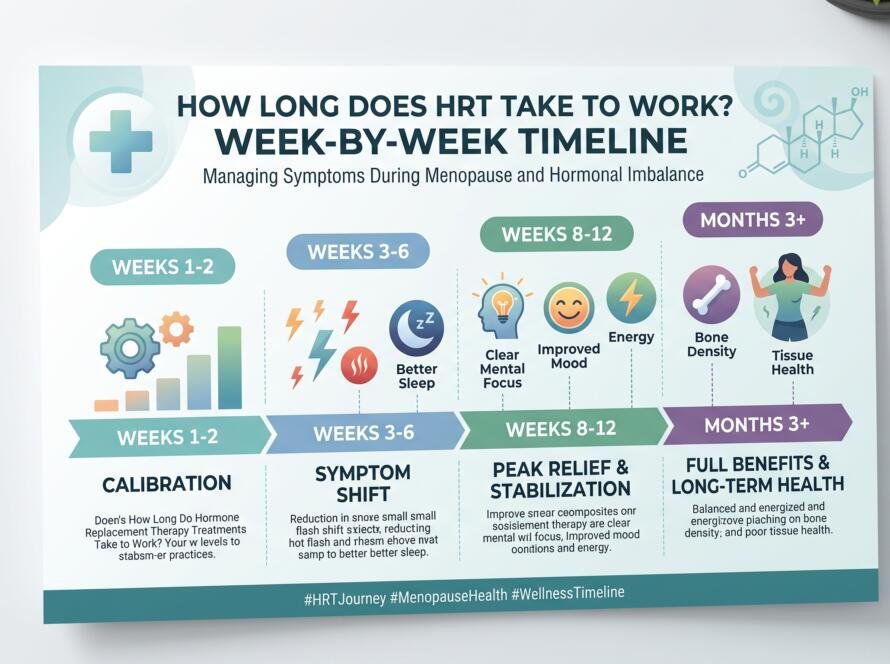
How long does it take for HRT treatments to work?
Many patients notice improvements within a few weeks, although full benefits may take several months depending on the treatment plan and individual response.
Are HRT treatments safe?
When prescribed and monitored by qualified healthcare professionals, hormone replacement therapy treatments can be safe and effective for many patients.
Can men and women both receive HR therapy?
Yes. HRTtreatments are available for both men and women experiencing hormone deficiencies or imbalances.
Will I need HRT forever?
Treatment duration varies from person to person. Your provider will regularly evaluate your progress and discuss long-term options.
Conclusion
It can be an effective solution for individuals struggling with symptoms caused by hormonal imbalances. By restoring optimal hormone levels, many patients experience improved energy, mood, sleep quality, sexual health, and overall quality of life.
While there are potential risks associated with treatment, careful evaluation, personalized care, and ongoing monitoring help ensure the safest and most effective outcomes. If you’re experiencing symptoms of hormonal imbalance, consulting with a qualified healthcare provider can help determine whether hormone replacement therapy treatments are right for you.
Taking a proactive approach to hormonal health may be the first step toward feeling your best again.